
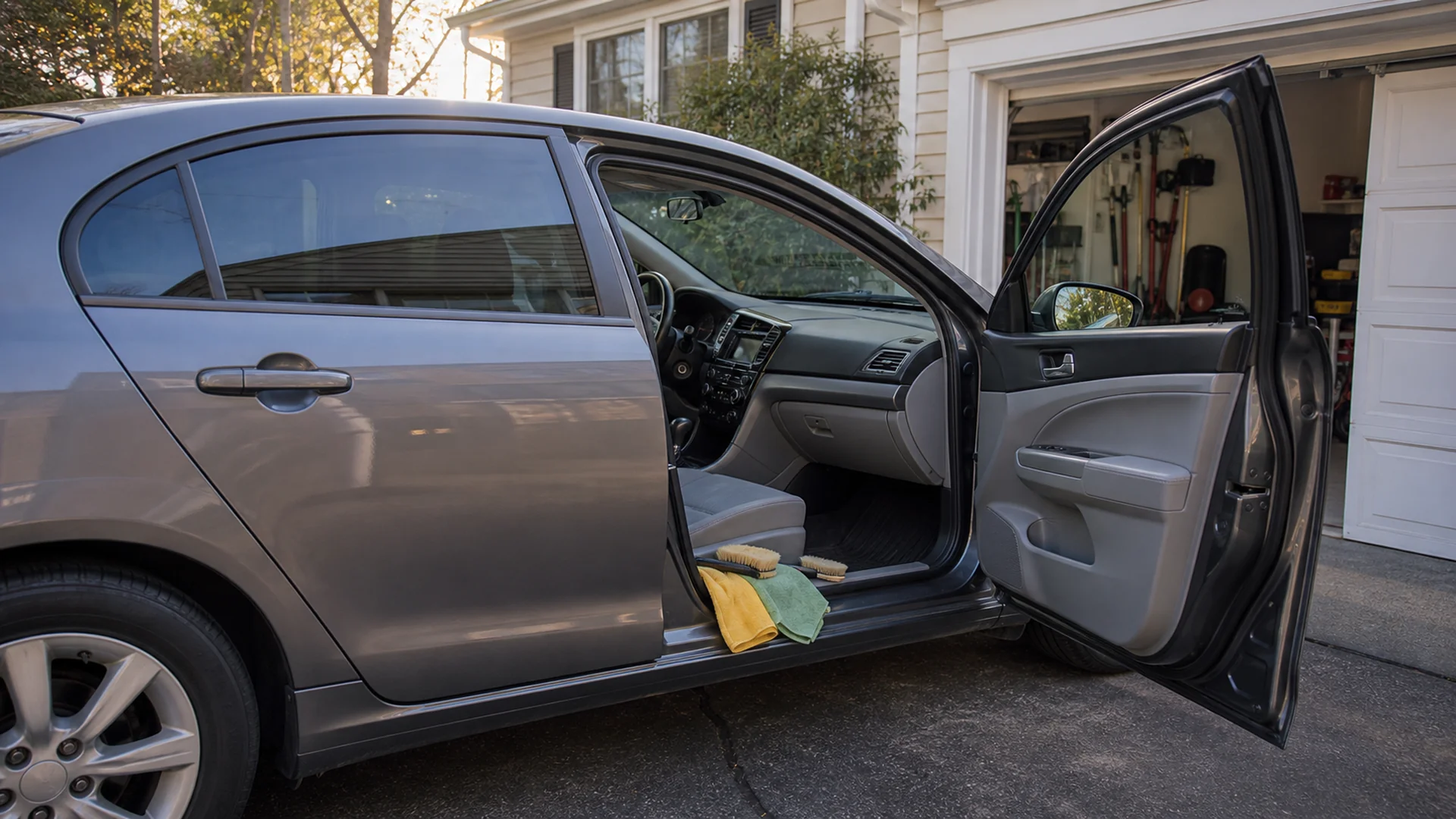
A clean vehicle usually presents better than a dirty one, but that does not mean every seller needs the same detail. The right choice depends on the vehicle's condition, the sale path, the deadline, and what a buyer or appraiser will see first.
If you are preparing to sell or trade a vehicle around Marlborough, a quote-led detailing request can help you focus the work. Lourenco Cleaning Services can review the vehicle context when you send photos and explain what scope makes sense before you schedule.
Private sale buyers inspect differently
Private buyers usually spend more time looking inside the car. They open doors, check seats, look at mats, inspect cargo space, and judge whether the vehicle seems cared for. A messy interior can make a mechanically sound car feel neglected.
For a private sale, interior presentation matters. Clean seats, floors, glass, console, door panels, and cargo areas can make photos and test drives feel more trustworthy.
Trade-ins are still presentation moments
A trade-in appraisal may be faster than a private sale, but presentation still matters. The vehicle should be easy to inspect. Personal belongings, trash, heavy debris, and obvious stains distract from the actual condition.
Detailing before a trade-in is not about hiding problems. It is about presenting the vehicle clearly and avoiding the impression that regular care was ignored.
What to clean first
Start with the areas buyers notice immediately: exterior front view, wheels, driver seat, dashboard, center console, mats, rear seats, trunk, and glass. Listing photos often show these areas, and buyers tend to ask about them when deciding whether to visit.
If the exterior is covered in salt or road film, it may make the car look older than it is. If the interior has crumbs, pet hair, or stains, it can make the car feel harder to own.
When full detailing is worth discussing
A full detail is worth discussing when the vehicle will be photographed, shown to strangers, or evaluated soon. It is also useful when the car has both interior and exterior buildup from daily use.
If the vehicle is older, heavily used, or being sold as-is, ask what scope is reasonable. The quote should match the goal. Sometimes a focused interior cleanup is smarter than a broader job; sometimes the whole vehicle needs the reset.
Photos help avoid overbooking
Send photos before you book so the quote can target the highest-impact areas. For selling, include the same angles you plan to use in the listing: front, rear, side, wheels, driver seat, back seat, dashboard, trunk, and any blemishes.
A detail should support the sale, not create unrealistic expectations. Be transparent about scratches, damage, or wear that cleaning will not change.
- Clean the surfaces buyers see in photos
- Remove personal items before appraisal or showing
- Do not assume cleaning fixes wear, damage, or mechanical issues
- Send current photos for a focused quote
- Mention your deadline before scheduling
How this should shape the quote conversation
Selling, trading, and lease-return details are deadline-driven. The question is not only what is dirty; it is what a buyer, dealer, or inspector will see first. That makes photos, timing, and purpose especially important in the quote request.
Send the same angles you expect someone else to inspect: front exterior, wheels, driver seat, dashboard, rear seats, mats, trunk or cargo area, and any visible blemishes. The detail should support an honest presentation of the vehicle.
Common mistakes to avoid
One mistake is expecting cleaning to fix wear, damage, or lease-policy issues. Detailing can improve cleanliness and presentation, but it does not change dents, torn fabric, cracked trim, or mechanical condition.
Another mistake is booking too late. If photos, appraisal, or return inspection are scheduled soon, mention the deadline in the first message so timing can be confirmed before the quote is treated as routine maintenance.
- Share the sale, trade-in, or lease-return deadline.
- Clean for the inspection angles people will actually see.
- Do not assume detailing repairs damage or wear.
- Remove belongings before photos, appraisal, or return.
Where owner confirmation still matters
A guide can help you ask better questions, but it should not replace direct confirmation from the business. Final scope, scheduling, appointment setup, and expectations should always be confirmed with Lourenco before the customer plans around the detail.
That is especially important for anything outside a straightforward auto detailing quote. Specialty vehicles, unusually heavy soil, stain expectations, odor concerns, boats, trucks, or non-standard access should be described plainly and confirmed by the owner before the job is treated as booked.
- Confirm the appointment location or setup before publishing or relying on an address.
- Confirm whether the quote is interior, exterior, or full detail.
- Confirm any specialty vehicle, boat, truck, stain, or odor expectations.
- Confirm timing, access, and photos before the appointment date.
What to send when you ask for a quote
The fastest way to get a useful detailing quote is to send the vehicle type, the service you are considering, the town where the vehicle will be available, a few current photos, and your preferred timing. For Lourenco Cleaning Services, keep the request simple: text or call (774) 285-0287 and ask for an auto detailing quote.
If the appointment location is outside Marlborough, include that detail up front so scheduling can be confirmed. Avoid assuming a fixed shop address or a fixed service area until the owner confirms the exact arrangement for the job.